Please ensure Javascript is enabled for purposes of website accessibility

What Does An EPC Partner Do

Two men wearing safety helmets review blueprints at a construction site; one holds the plans, the other uses a tablet. Construction equipment is visible in the background.

Table of Contents

An EPC partner handles the three core phases of a project under one contract: engineering, procurement, and construction. Instead of juggling multiple vendors, you work with a single contractor who takes responsibility for the entire delivery.

Here’s what each phase covers:

  • Engineering: Detailed design, technical specifications, and planning that turn your project vision into a buildable blueprint.
  • Procurement: Sourcing, purchasing, and managing the equipment, materials, and services your project requires.
  • Construction: On-site execution, project management, and commissioning to bring the finished asset into operation.

Choosing the right EPC contractor can make or break a capital project. The wrong partner leads to cost overruns, missed deadlines, and quality issues that ripple through the life of an asset. The right one becomes an extension of your own team-someone who shoulders risk, solves problems before they escalate, and treats your project goals as their own.

Choosing MEB as your EPC (Engineering, Procurement, and Construction) partner it gives you a single point of accountability for your entire project-from design through to commissioning. MEB combines technical expertise, reliable procurement, and disciplined construction management to deliver projects on time, on budget, and to spec.

MEB stands out for its integrated approach and commitment to delivering projects without compromise. Rather than treating engineering, procurement, and construction as separate silos, MEB connects them into one seamless workflow.



Share:

Case Study

A revolutionary approach to water supply

To cope with a crippling and prolonged drought crisis, MEB installed a containerized desalination plant at Richards Bay, South Africa. The project was completed in just seven months. The containers were easily transported to the designated location.1

More Posts

Related Posts
Clean Water Brighter Futures

Millions of people living in South Africa’s informal settlements still lack access to clean water and safe sanitation. The consequences ripple across every part of

A white shipping container labeled "Water out of the Box. NIROBOX" on its side, with closed doors and metallic reinforcements—an innovative unit featured in Amazing Facts about Desalination and the NIROBOX™.
Smart Water Solutions Delivered Faster

Choosing a decentralized, containerized system offers several distinct advantages over conventional desalination plants. Smaller modular units can be deployed closer to water-stressed communities, reducing the

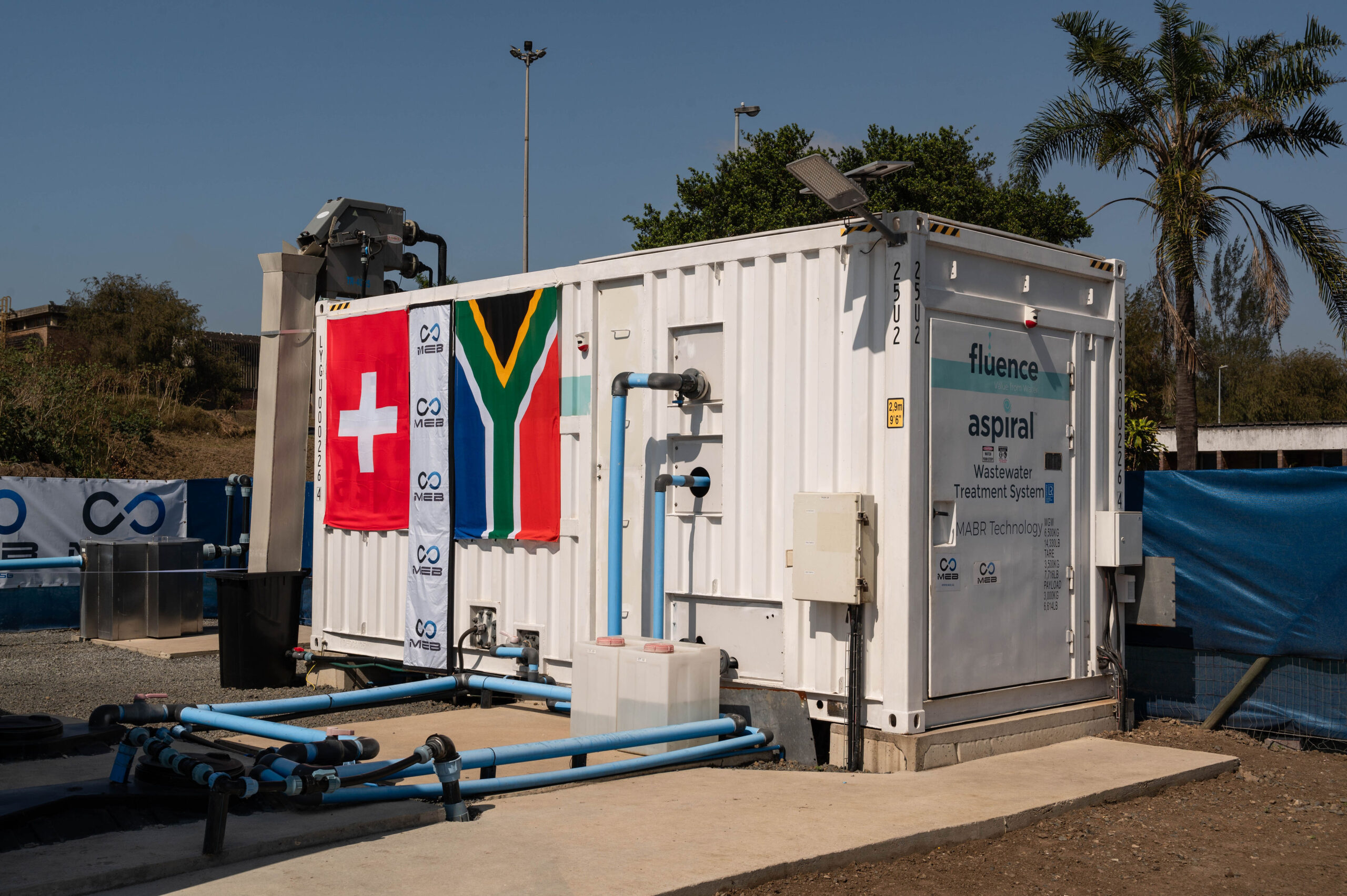
A Fluence Aspiral wastewater treatment system in a shipping container, with Swiss and South African flags hanging on the side.
Securing Our Water Future

Old, energy-heavy wastewater treatment methods can’t keep up anymore. As energy prices climb and environmental regulations tighten, municipalities and industries need smarter infrastructure and they