
Please ensure Javascript is enabled for purposes of website accessibility

The main causes of water scarcity in South Africa

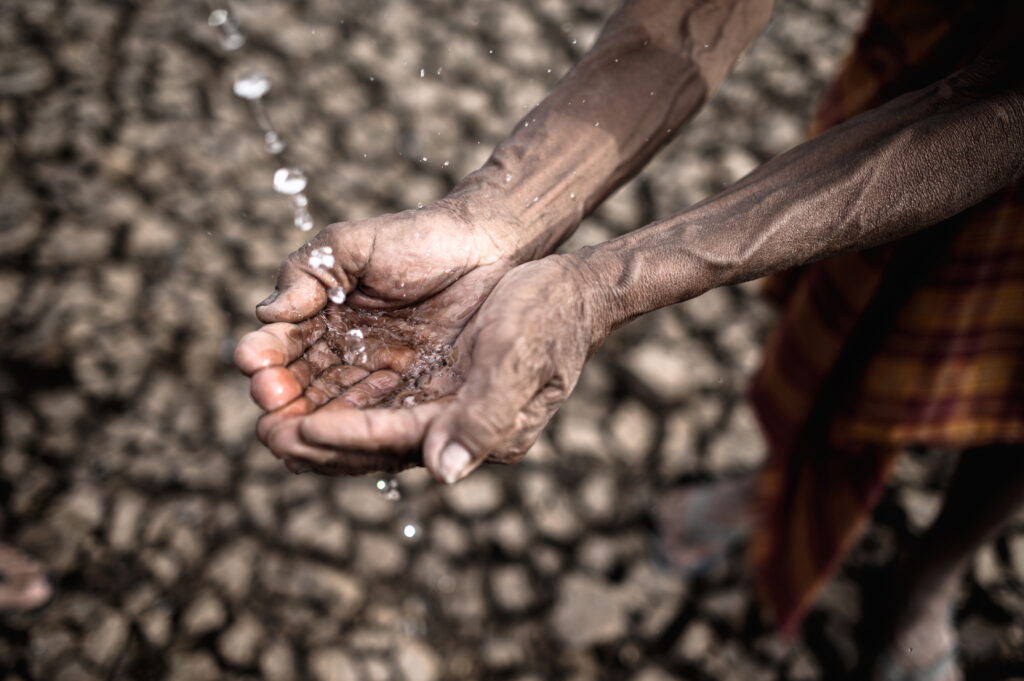
A pair of cupped hands catch a small stream of water above dry, cracked earth.

Table of Contents

The main causes of water scarcity in South Africa, the water crisis is not the result of a single event. It stems from a complex intersection of environmental, structural, and administrative challenges that have compounded over several decades.

How does climate change impact South African rainfall patterns?

South Africa has always been a naturally semi-arid country. However, climate change has drastically altered historical rainfall reliability. In 2026, the country experiences highly erratic weather patterns driven by shifting ocean temperatures. Prolonged dry spells now regularly deplete the major dams supplying urban hubs. When rain does fall, it often arrives in concentrated, destructive storms that overwhelm catchment systems rather than gently replenishing groundwater reserves. This volatility makes long-term water planning incredibly difficult for the national government.

At MEB, we understand the growing challenges posed by unpredictable weather patterns and the strain they place on water resources. Our innovative water solutions focus on resilience and sustainability, ensuring communities can adapt to these changing conditions. From advanced efficient water treatment technologies, we provide tools that maximize resource use and minimize waste. Additionally, our tailored planning services help urban and rural areas implement smart water management strategies, safeguarding both current and future water needs. With MEB, managing water in an uncertain climate becomes both practical and achievable.
 

Share:

Case Study

A revolutionary approach to water supply

To cope with a crippling and prolonged drought crisis, MEB installed a containerized desalination plant at Richards Bay, South Africa. The project was completed in just seven months. The containers were easily transported to the designated location.1

More Posts

Related Posts
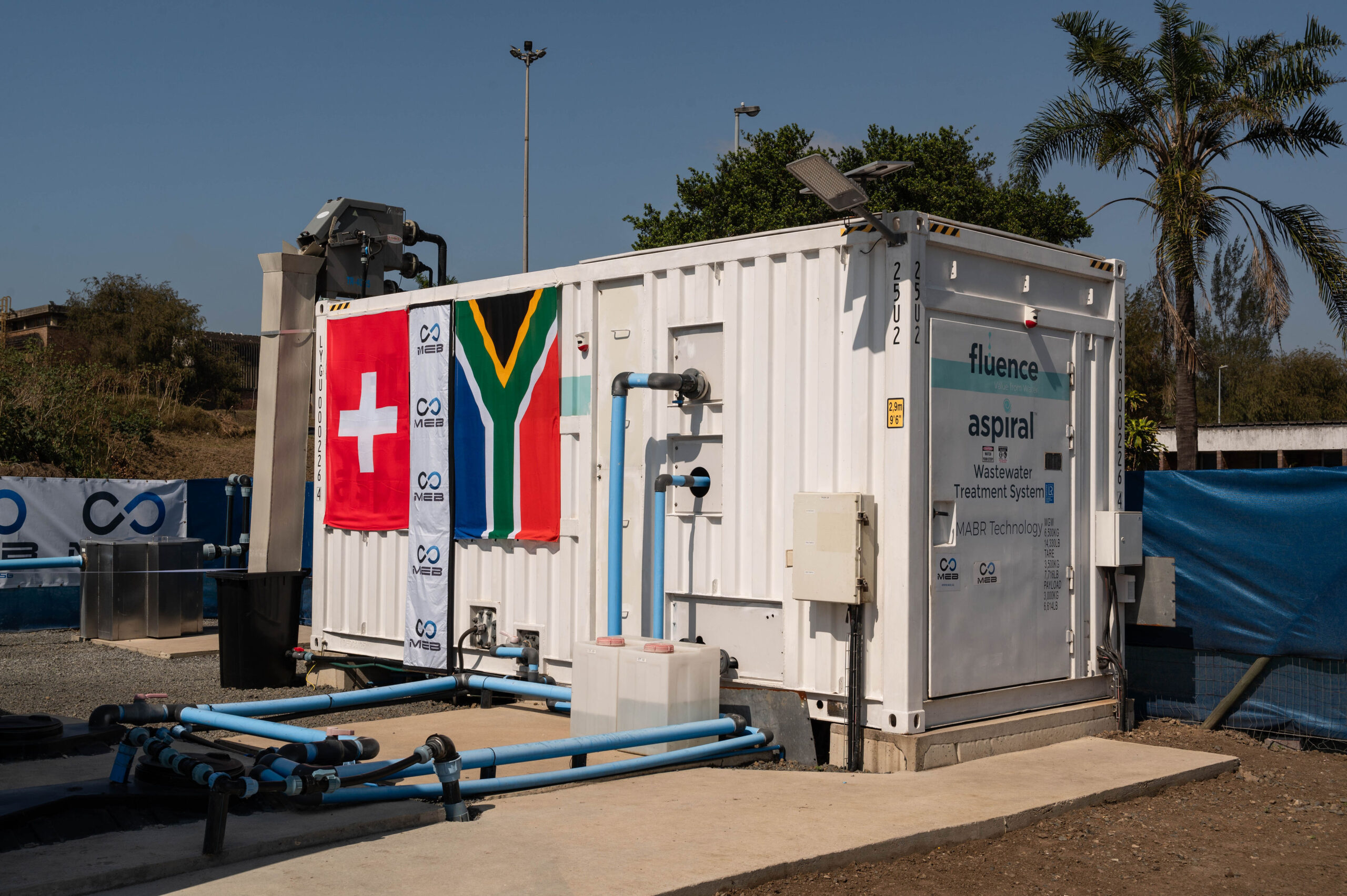
A Fluence Aspiral wastewater treatment system in a shipping container, with Swiss and South African flags hanging on the side.
Securing Our Water Future

Old, energy-heavy wastewater treatment methods can’t keep up anymore. As energy prices climb and environmental regulations tighten, municipalities and industries need smarter infrastructure and they

A single water droplet hits a surface, creating a central column and expanding concentric ripples.
Transforming Water Treatment Through Innovation

Water is one of our most valuable natural resources. Yet growing demand, environmental pressures, and increasing scarcity continue to challenge industries and communities worldwide. Meeting

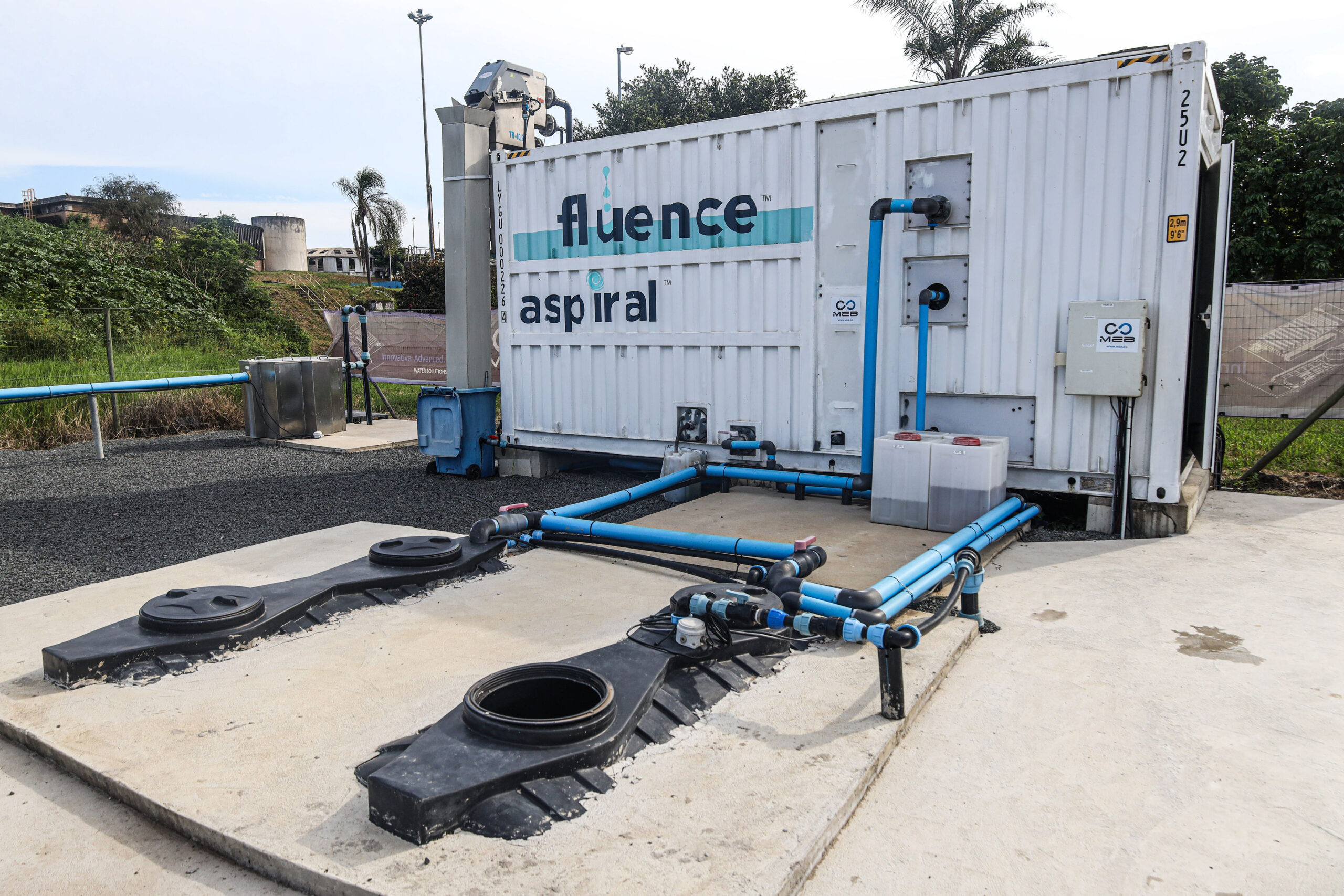
A white Fluence Aspiral industrial container unit with blue piping connected to two circular access ports on a concrete slab.
The Time for Action Is Now

Water scarcity isn’t some distant possibility it’s already reshaping communities, municipalities, and industries across South Africa. Headlines tend to focus on changing weather patterns and