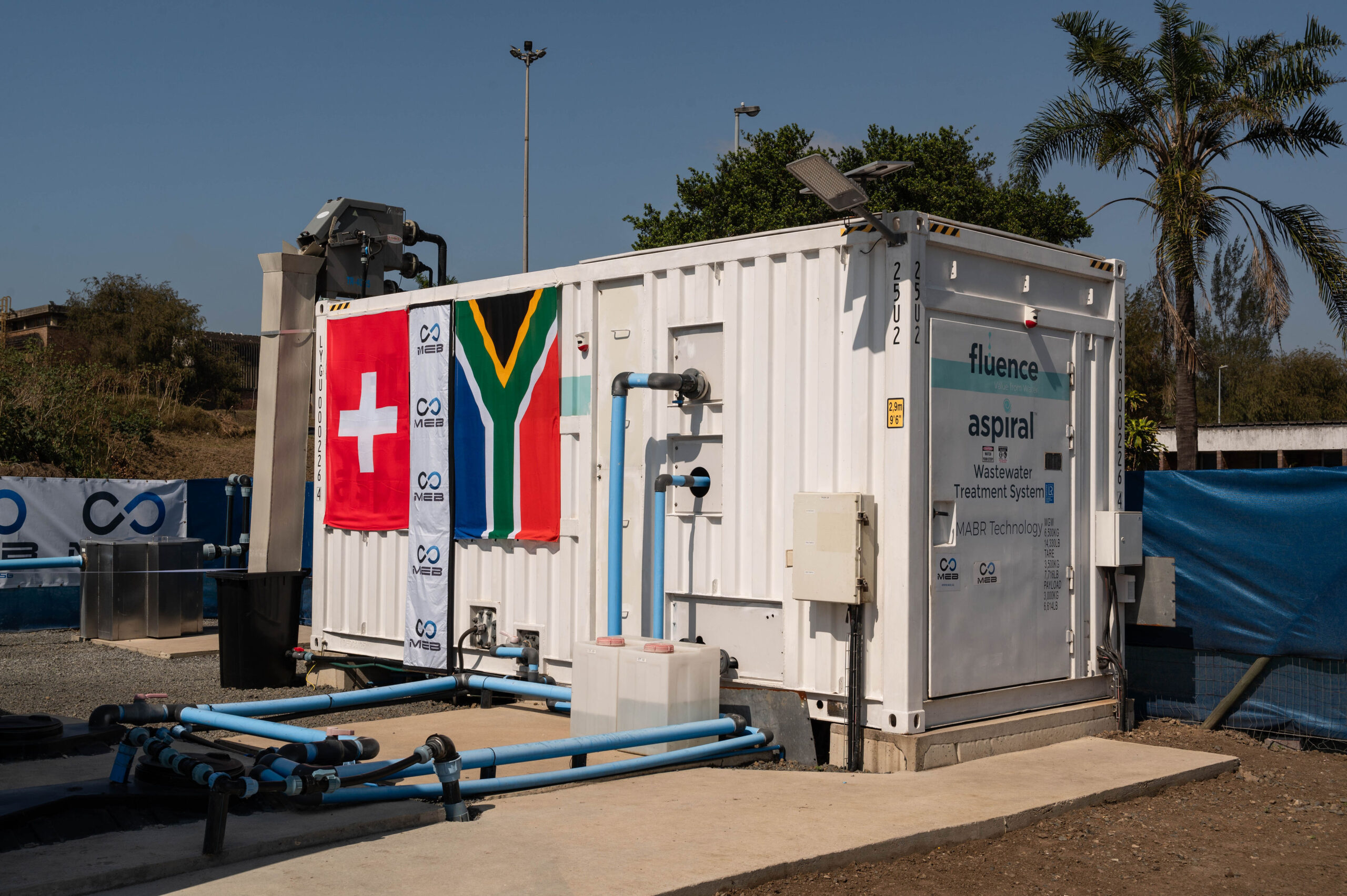
Choosing a decentralized, containerized system offers several distinct advantages over conventional desalination plants.
Smaller modular units can be deployed closer to water-stressed communities, reducing the need for extensive distribution infrastructure and allowing capacity to expand as demand grows. Containerized designs also simplify transportation, installation, and maintenance, while decentralized operation can improve resilience by avoiding reliance on a single large facility.
Commissioning
Building a traditional desalination plant involves complex permitting, extensive site preparation, and lengthy construction timelines. Nirobox™ units, by contrast, are manufactured and assembled off-site. Once the container arrives at its destination, it requires minimal site preparation – usually just a flat concrete slab and basic utility connections. This plug-and-play design means the system can begin producing clean water within weeks of delivery.
High Energy Efficiency
Desalination has historically been an energy-intensive process. Nirobox™ systems address this challenge by incorporating energy recovery devices that capture kinetic energy from the high-pressure reject stream (the brine left over after filtration) and transfer it to the incoming feed water. This dramatically reduces the plant’s overall energy consumption, lowering operational costs and reducing its environmental footprint.
Seamless Scalability
Water demand rarely remains static. A growing coastal town or an expanding manufacturing facility will eventually need a higher volume of fresh water. With a modular system, increasing capacity is straightforward: operators simply add another Nirobox™ container to the existing setup. These units operate in parallel, allowing for flexible capacity expansions without interrupting the current water supply.
Rapid Deployment
Because each Nirobox™ system arrives pre-engineered and factory-tested, installation timelines are significantly shorter than those of conventional desalination plants. Sites can move from delivery to water production faster, helping communities and industries respond quickly to drought, seasonal demand, or emergency supply disruptions.
Get in Touch
From initial site assessment to commissioning and operator training, at MEB we provide practical support at every stage. Our teams help ensure each modular system is configured for local feedwater conditions, production targets, and operational requirements. For tailored solutions and expert advice on scalable water treatment systems. Contact our engineers at MEB today we’re here to help you meet your specific water needs efficiently and effectively.