The role of MABR efficiency, this data-driven approach prevents under-aeration, which can compromise treatment quality, as well as over-aeration, which wastes energy and disrupts the anoxic zones essential for denitrification. In practice, smart controls can generate an additional 10% to 20% efficiency gain on top of the baseline savings provided by MABR’s passive transfer mechanism.
Hardware alone cannot deliver maximum efficiency; process control is equally essential. MEB integrates advanced monitoring and automation into its systems to optimize oxygen delivery in real time, adjusting airflow rates based on sensor data collected directly from the biofilm and bulk liquid.
Furthermore, remote monitoring capabilities significantly reduce the on-site operational burden. This is a major advantage for smaller utilities or industrial sites that operate with limited technical staff.
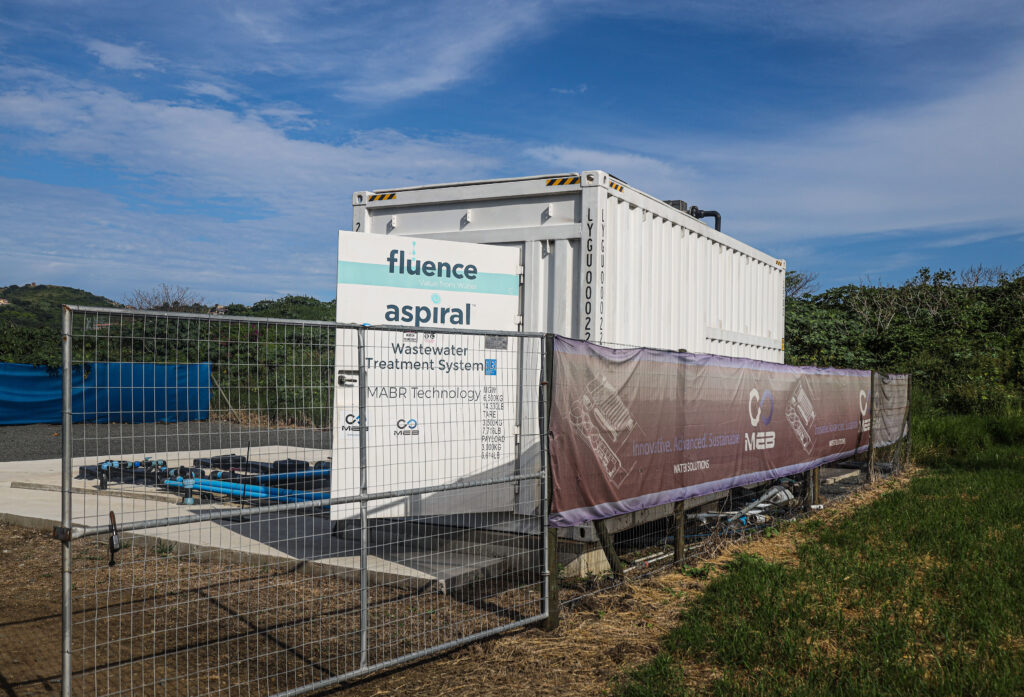
Both pilot and full-scale deployments of Fluence Aspiral™ MABR technology have consistently demonstrated reliable performance across various loading conditions. Key outcomes reported in peer-reviewed studies and industry case studies include:
- BOD removal rates: Exceeding 90% under normal operating conditions.
- Ammonia removal: Achieving effluent concentrations below 1 mg/L in well-operated systems.
- Total nitrogen removal: Reaching 70% to 85% via simultaneous nitrification-denitrification, without the need for external carbon dosing.
- Specific aeration energy: Dropping as low as 0.5 to 0.8 kWh/kg of BOD removed, compared to the 1.5 to 2.5 kWh/kg required for conventional fine-bubble aeration.
MEB’s integrated systems by Fluence are purposefully engineered to maintain these high-performance benchmarks even with variable influent quality. This adaptability is a critical consideration for industrial clients dealing with fluctuating waste streams.
For more information or to discuss how we can benefit your operations, contact our team at MEB. We are here to provide tailored solutions to meet your specific wastewater treatment needs.