Please ensure Javascript is enabled for purposes of website accessibility

The Transformation of South Africa’s Water Infrastructure through Digitisation Not Optional

Aerial view of a green forested landscape with digital icons overlay, symbolizing sustainability and innovation in renewable energy and environmental concepts against a cloudy sky.

Table of Contents

By 2025, South Africa is expected to experience water scarcity and by 2030, major water famine. The promise of smart cities creates an area of relief by leveraging IoT technologies through digitisation of critical infrastructure. Using proven digitalization technology to manage SA’s water crisis, involves many moving parts ranging from sensors through edge devices to cloud platforms.

MEB can help water and wastewater utilities address many of the acute problems communities face – including prolonging the life span of aging infrastructure, pipe leaks, vandalism or other abnormalities in the distribution network, as well as remediating water quality, service levels and upgrading supply, by fostering water conservation and increasing revenue growth through operational efficiencies.

The digitalization of water is no longer optional, and the bureaucratic readiness of a nation will have a major impact on water supply competence. The same forces that have the power to industrialize new technologies into the ecosystem are now moving toward the digitization of the water business for the economic benefits of communities.

MEB has the global competitiveness, technological capacity, and market presence across multiple geographies – with strong interactive peer-to-peer disruptive bespoke solutions that make your transformation journey as simple as plug-and-play.
Share:

Case Study

A revolutionary approach to water supply

To cope with a crippling and prolonged drought crisis, MEB installed a containerized desalination plant at Richards Bay, South Africa. The project was completed in just seven months. The containers were easily transported to the designated location.1

More Posts

Related Posts
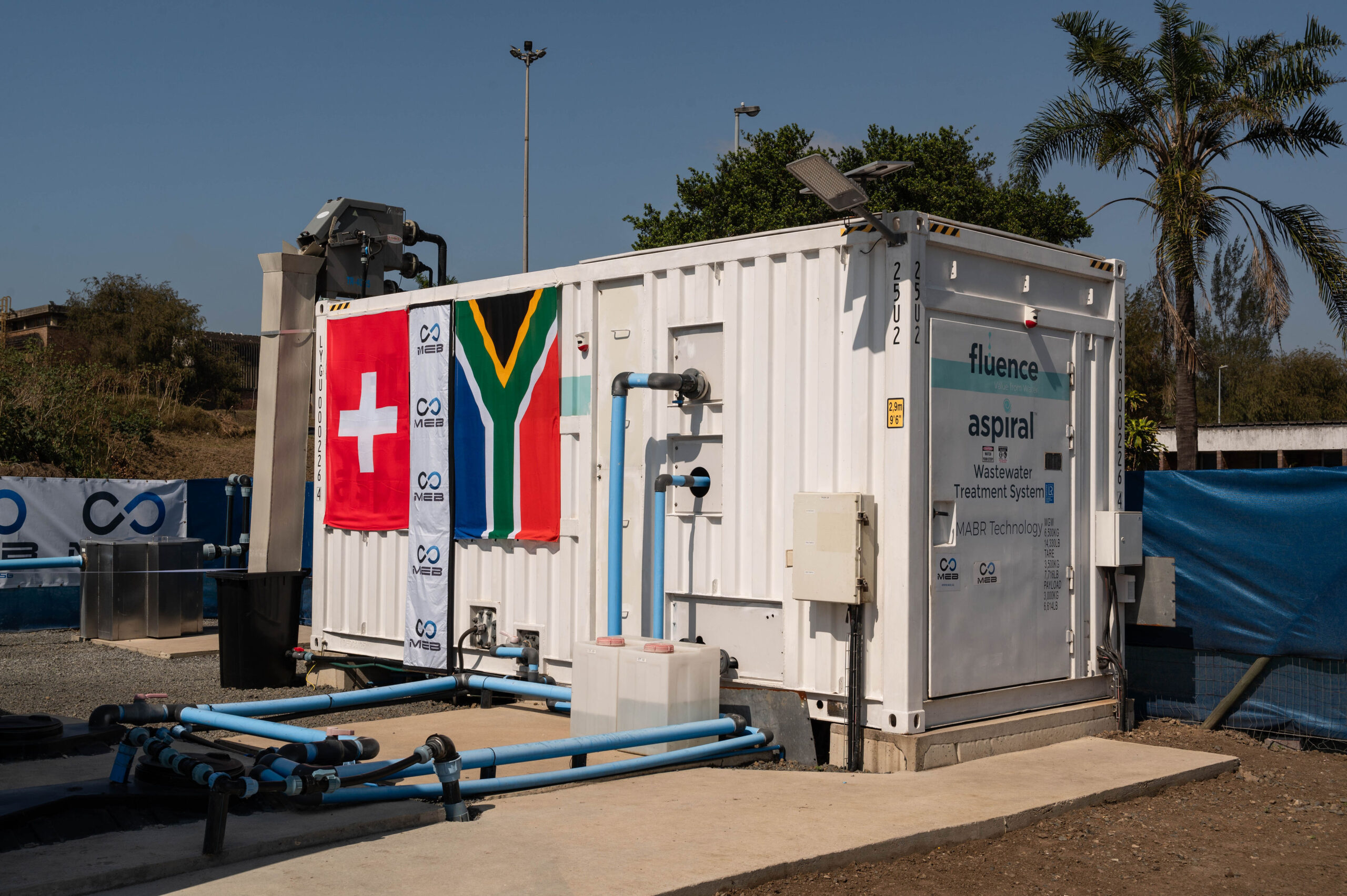
A Fluence Aspiral wastewater treatment system in a shipping container, with Swiss and South African flags hanging on the side.
Securing Our Water Future

Old, energy-heavy wastewater treatment methods can’t keep up anymore. As energy prices climb and environmental regulations tighten, municipalities and industries need smarter infrastructure and they

A single water droplet hits a surface, creating a central column and expanding concentric ripples.
Transforming Water Treatment Through Innovation

Water is one of our most valuable natural resources. Yet growing demand, environmental pressures, and increasing scarcity continue to challenge industries and communities worldwide. Meeting

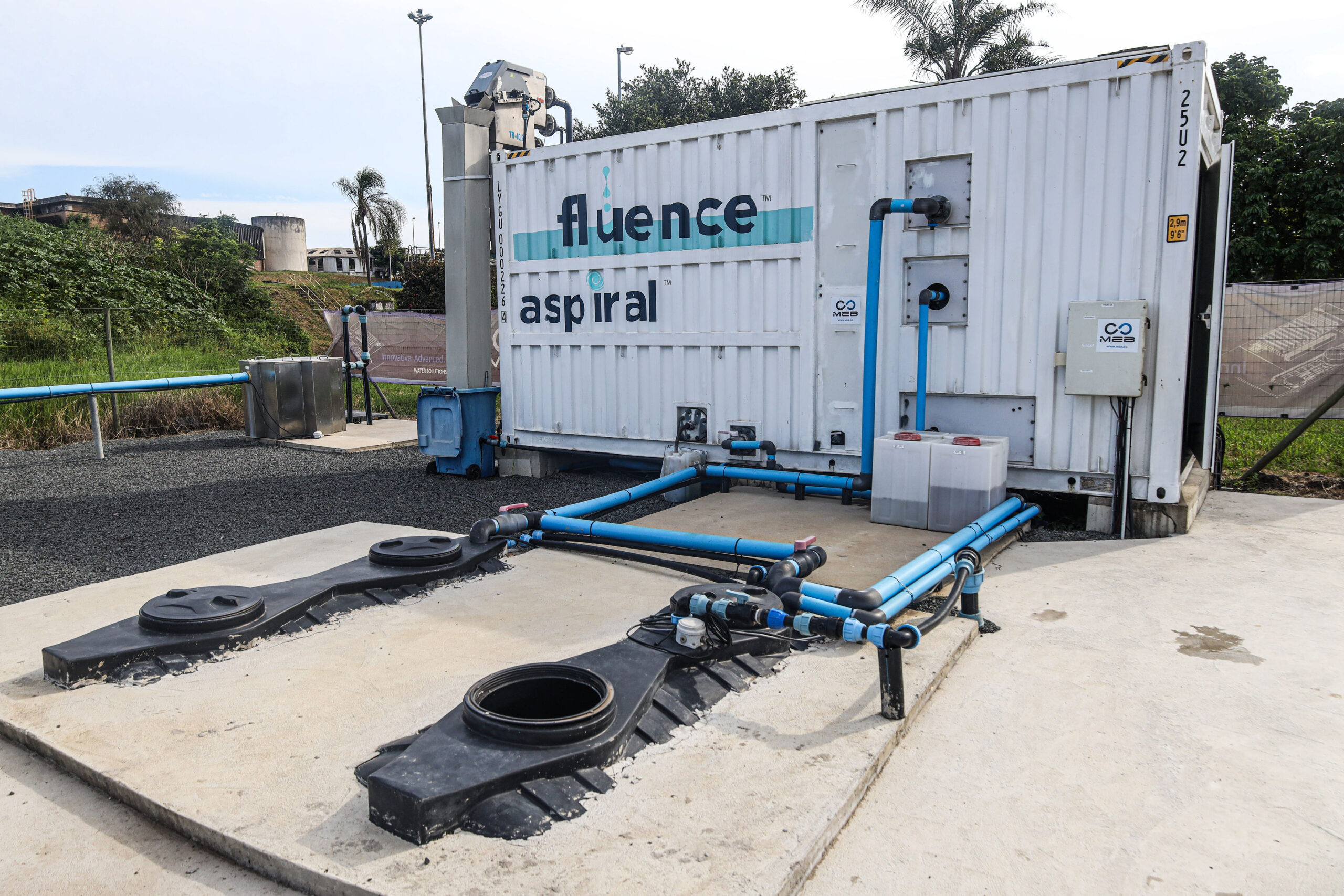
A white Fluence Aspiral industrial container unit with blue piping connected to two circular access ports on a concrete slab.
The Time for Action Is Now

Water scarcity isn’t some distant possibility it’s already reshaping communities, municipalities, and industries across South Africa. Headlines tend to focus on changing weather patterns and