
In times of loadshedding, choosing the right wastewater solution can be a major factor in protecting the environment and communities. MABR technology is the most efficient wastewater treatment solution on the market and has proven to perform well, even under uncertain circumstances. MABR technology be is based onpassive aeration, which works through the diffusion of oxygen through the semi permeable membranes. During the process, oxygen is continuously supplied to the fixed nitrifying biofilm that develops on the wastewater side of the membrane while denitrification occurs in the anoxic bulk liquid.
The Benefits of Aspiral™
- High Effluent Quality
MABR’s efficient nutrient removal produces high-quality water suitable for use in irrigation or discharge into the environment. - Simultaneous Nitrification and Denitrification
A biofilm that forms on the spirally wound membrane supports simultaneous nitrification-denitrification (SND) for high nutrient removal. - Low OPEX
Aspiral’s simple design means low maintenance and operation costs, and the systems can be remotely operated and controlled. The MABR technology also reduces the need for added carbon.
- Energy Efficiency
The MABR modules use low-pressure passive aeration, which reduces the energy used for aeration by up to 90%. This low energy consumption allows for decentralized treatment off the power grid. - Low Odor and Noise
Using passive aeration not only saves energy, but it also lowers levels of noise and odor for neighborhood-friendly operation. - Flexibility and Scalability
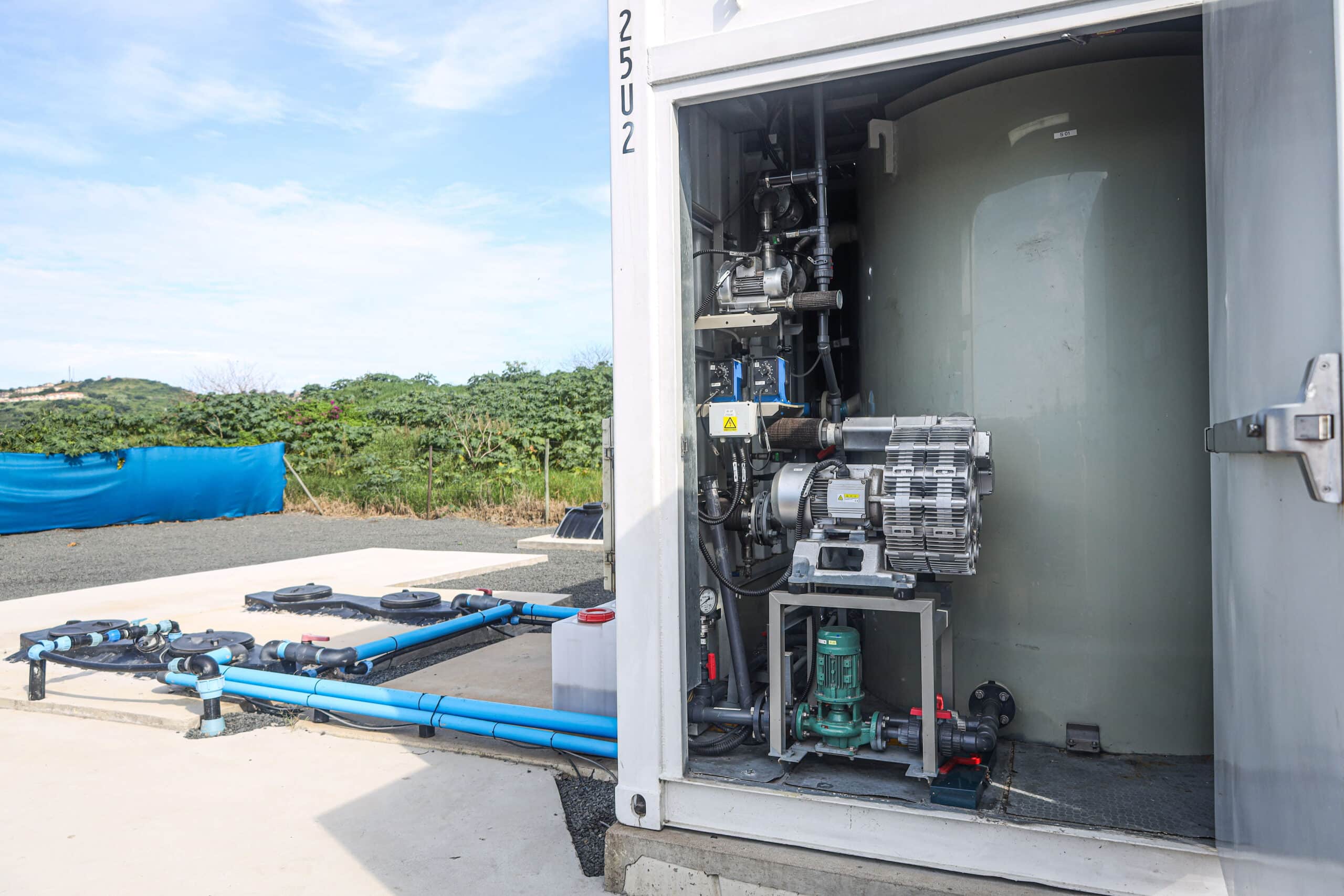
Fluence Aspiral MABR solutions are available as decentralized, scalable, easily portable systems packaged in standard shipping containers.
MEB is the leader in installing this revolutionary solution in KwaZulu Natal and we will continue to bring change to South Africa’s wastewater treatment sector by working with the best in industry. Want to know more about our projects and how to get this solution to work for you?