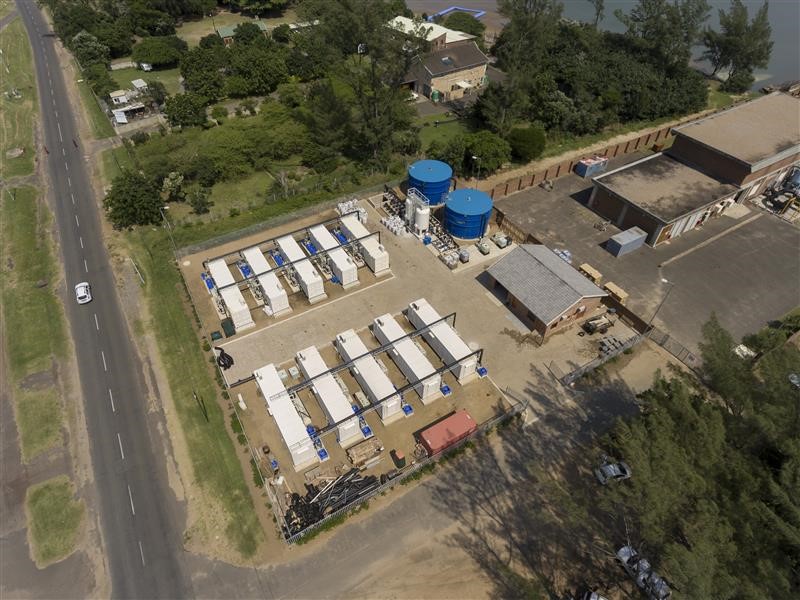
The Nirobox™ is a flexible, modular seawater reverse osmosis (SWRO) desalination system designed for rapid deployment and scalability. It addresses water scarcity by delivering containerized, energy-efficient desalination technology suited for remote locations, island communities, and industrial applications.
Water scarcity affects billions of people worldwide, and the pressure on freshwater resources is only intensifying. Rivers are shrinking. Aquifers are being depleted faster than they can recharge. For coastal communities and water-stressed regions, the ocean represents an enormous, untapped resource-but converting saltwater into safe drinking water has historically been expensive, complicated, and slow to deploy.
How Does Niroflex Desalination Work?
To understand what makes our Nirobox™ effective, it helps to understand the underlying technology.
Reverse osmosis (RO) works by forcing saltwater through semi-permeable membranes under high pressure. The membranes allow water molecules to pass through while blocking dissolved salts, minerals, and other contaminants. The result is purified freshwater on one side of the membrane and a concentrated brine stream on the other.
SWRO systems like Nirobox™ typically include several stages:
- Pre-treatment: Filtration to remove suspended solids, algae, and other particles that could foul the membranes
- High-pressure pumping: Driving seawater through the RO membranes
- Membrane separation: The actual desalination process
- Post-treatment: pH adjustment, remineralization, and disinfection to make the water safe for drinking
- Brine disposal: Managing the concentrated saltwater byproduct responsibly
Energy recovery devices are often integrated into SWRO systems to recapture pressure from the brine stream, significantly reducing overall energy consumption a key consideration given that energy costs typically represent the largest operating expense in desalination.
Why Choose MEB as Your Water Desalination Partner?
At MEB we stands out as a trusted partner in delivering efficient and sustainable desalination solutions. With extensive expertise in seawater desalination systems, we provide tailored designs that prioritize energy efficiency, cost-effectiveness, and environmental responsibility. Our advanced technologies ensure high-quality water output, while our commitment to innovation enhances long-term reliability. By choosing MEB, you gain a partner dedicated to meeting your unique water needs with cutting-edge solutions and exceptional support every step of the way.