How much energy can MABR systems actually save?
Key benefits of MABR, for operators calculating lifecycle costs, the energy reduction alone often justifies the investment within a relatively short payback period. Add reduced sludge production (another characteristic of biofilm-based systems), and the operational economics become even more compelling.
The energy savings from MABR are substantial and well-documented. Thanks to its low-pressure aeration model, blowers and compressors run at a fraction of the capacity that conventional diffuser systems demand. And when you integrate MABR with smart process controls-an area MEB actively develops-the savings compound even further through demand-based oxygen dosing.
One of the technology’s most important advantages is strict nutrient removal standards. Regulatory standards for nitrogen and phosphorus in treated effluent are tightening globally. MABR’s ability to achieve simultaneous nitrification and denitrification within a single biofilm means nutrient removal happens concurrently with carbon removal, without requiring additional process stages or chemical dosing.
This is a meaningful differentiator for facilities that currently rely on chemical denitrification to meet discharge limits, as MABR can reduce or eliminate that recurring chemical cost.
What are the space advantages of MABR technology?
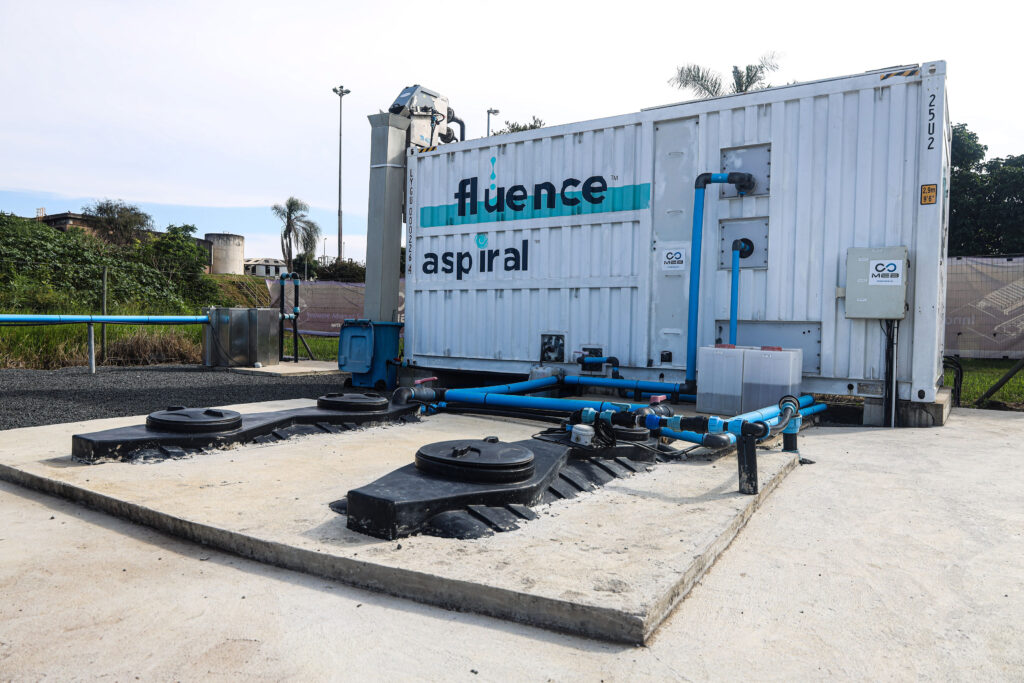
Conventional biological treatment requires large aeration basins, secondary clarifiers, and often separate anoxic tanks for denitrification. Fluence Aspiral™ MABR systems achieve equivalent or better treatment in a fraction of the space.
For urban utilities, industrial facilities with limited footprint, or sites where land cost is prohibitive, this compactness opens treatment options that previously weren’t viable. Meb’s integration of containerized and modular configurations takes this a step further, enabling rapid deployment without permanent civil works.
Ready to bring your project to life? Contact our expert engineering team at MEB today to get started.