
Please ensure Javascript is enabled for purposes of website accessibility

Parched Wings

Airport infrastructure is vital to facilitate aviation operations and is a very important part of the South African economy.
The airplane, its parched wings gliding gracefully, descends onto the runway with guidance lights leading the way beneath a cloudy sky.

Table of Contents

Airport infrastructure is vital to facilitate aviation operations and is a very important part of the South African economy. SA facilitates some of Africa’s busiest airports and it’s service providers employed about 472 000 people. The remarkable growth of the aviation sector in Africa has led to a drastic increase in water consumption. Airports also generate sizable amount of wastewater that may include hazardous contaminants and chemicals.

Airport operations in South Africa take a considerable toll on the environment, including water, electricity and fuel usage. Africa’s growing water and energy conservation programmers for waste management are pivotal in supporting an inclusive and just society.

That’s why understanding sustainable water management practices is essential in the aviation industry. Airport facilities consume large amounts of water, usually for non-potable purposes like water cooling systems, fire control, cleaning and washing of vehicles, runways and aircrafts including public uses. Recent studies results have shown that annual water consumption can range around 436 000 m3.

We’ll engineer the best system to minimize the impact on water resources by using specialized

products to solve water and energy related problems in the aviation industry. While we believe that every sector has a social and environmental impact to consider when evolving, we know that all things good, need immaculate planning and implementation to succeed.

Our trained staff are ready to answer all your questions, so just give us a call!
Share:

Case Study

A revolutionary approach to water supply

To cope with a crippling and prolonged drought crisis, MEB installed a containerized desalination plant at Richards Bay, South Africa. The project was completed in just seven months. The containers were easily transported to the designated location.1

More Posts

Related Posts
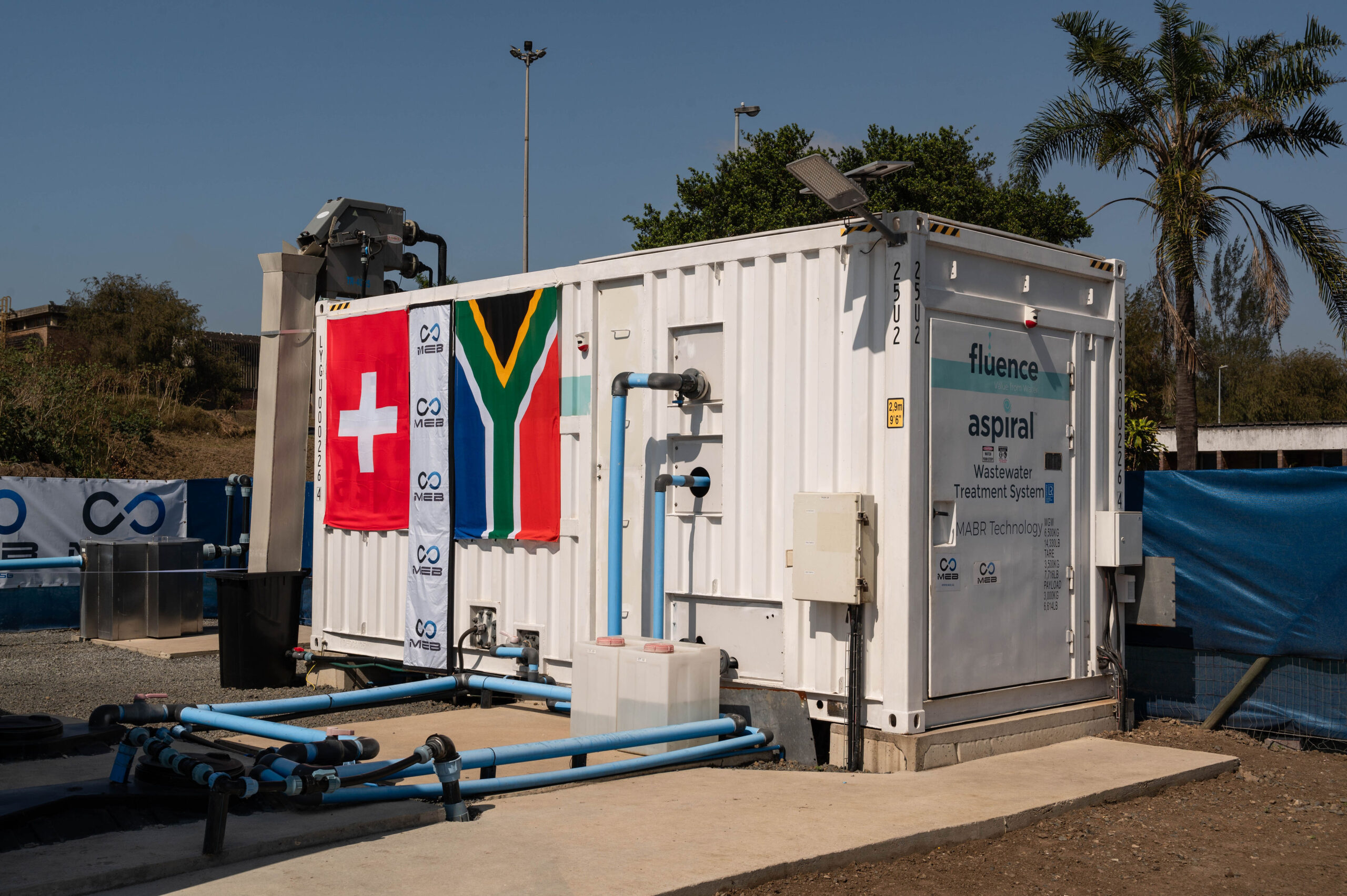
A Fluence Aspiral wastewater treatment system in a shipping container, with Swiss and South African flags hanging on the side.
Securing Our Water Future

Old, energy-heavy wastewater treatment methods can’t keep up anymore. As energy prices climb and environmental regulations tighten, municipalities and industries need smarter infrastructure and they

A single water droplet hits a surface, creating a central column and expanding concentric ripples.
Transforming Water Treatment Through Innovation

Water is one of our most valuable natural resources. Yet growing demand, environmental pressures, and increasing scarcity continue to challenge industries and communities worldwide. Meeting

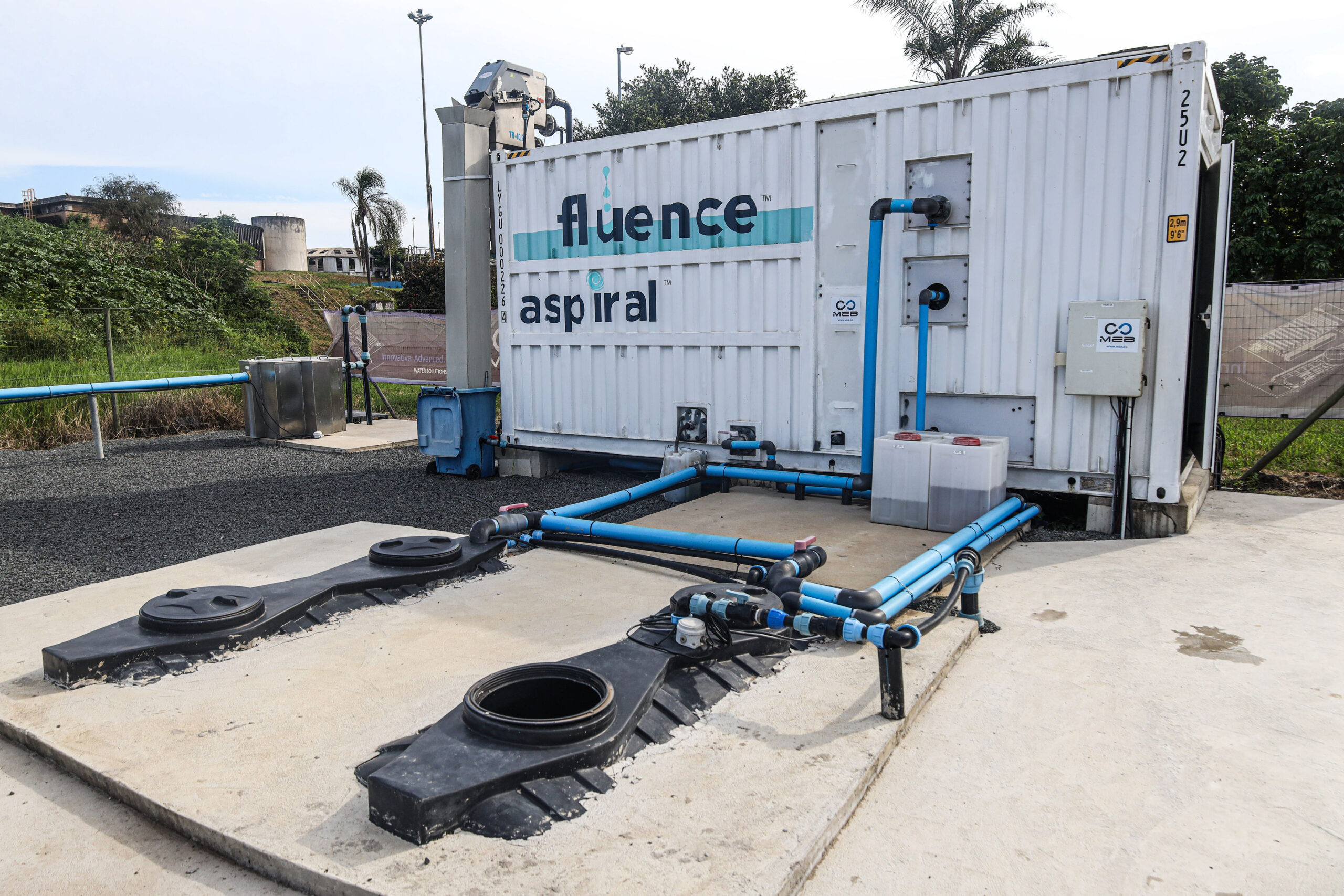
A white Fluence Aspiral industrial container unit with blue piping connected to two circular access ports on a concrete slab.
The Time for Action Is Now

Water scarcity isn’t some distant possibility it’s already reshaping communities, municipalities, and industries across South Africa. Headlines tend to focus on changing weather patterns and