

Please ensure Javascript is enabled for purposes of website accessibility

Decentralised – Sustainable – Advanced

Growing Demand For Sustainable Fresh Water Sources
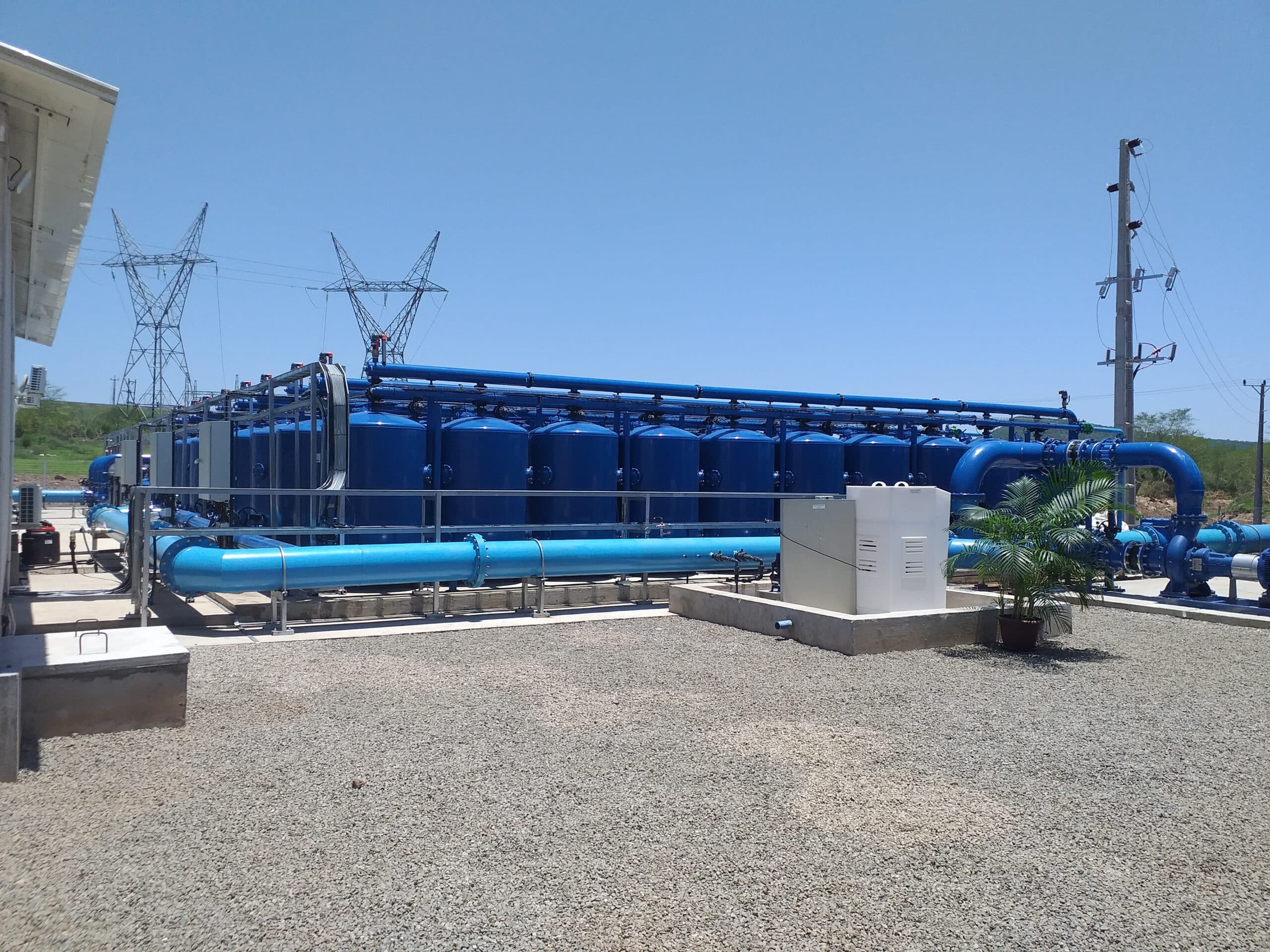
Industrial blue machinery and pipes at a water treatment facility under a clear sky. Power lines and a small plant are also visible.

Table of Contents

Growing Demand For Sustainable Fresh Water Sources

1.8 billion people are predicted to live in areas of extreme water scarcity by 2025. As drinkable water reserves are getting scarce and population increases globally, desalination, a process that derives freshwater from sea or brackish water, is becoming more and more widespread.

At MEB , we provide a comprehensive list of advanced water technologies and services, catering to all communities industries worldwide.

Visit our case studies page and learn how MEB implemented a state of the art Seawater Desalination Plant in South Africa.

Share:

Case Study

A revolutionary approach to water supply

To cope with a crippling and prolonged drought crisis, MEB installed a containerized desalination plant at Richards Bay, South Africa. The project was completed in just seven months. The containers were easily transported to the designated location.1

More Posts

Related Posts
A white shipping container labeled "flu ence aspiral" with attached blue and gray pipes, situated outdoors on a concrete pad with trees and a fence in the background.
MABR For Residential Developers

Wastewater treatment rarely makes it onto a developer’s wish list-but it can quickly become the issue that stalls or derails a project. As housing developments

Aerial view of an island resort with overwater bungalows, curved walkways, lush greenery, and turquoise blue water surrounding the area.
The Water Solution Island Resorts Need

Running a luxury island resort means delivering flawless guest experiences crystal-clear pools, immaculate linens, gourmet kitchens. But behind the scenes, one challenge quietly threatens all

Wastewater Treatment In Cotton Factories

Cotton is everywhere. It’s in your t-shirt, your bed sheets, your denim jeans. And yet, despite covering only 2.5% of the world’s cultivated land, it