

Please ensure Javascript is enabled for purposes of website accessibility

Climate Resilience for Agricultural Practices & Agroforestry

Climate change is caused by greenhouse gas emissions, that cause the air and ocean temperatures to rise, resulting in snow and ice to melt and ending in floods. Land adaptation from natural to managed ecosystems, is necessary for food production, but continues to occur at very high rates with significant water impacts.
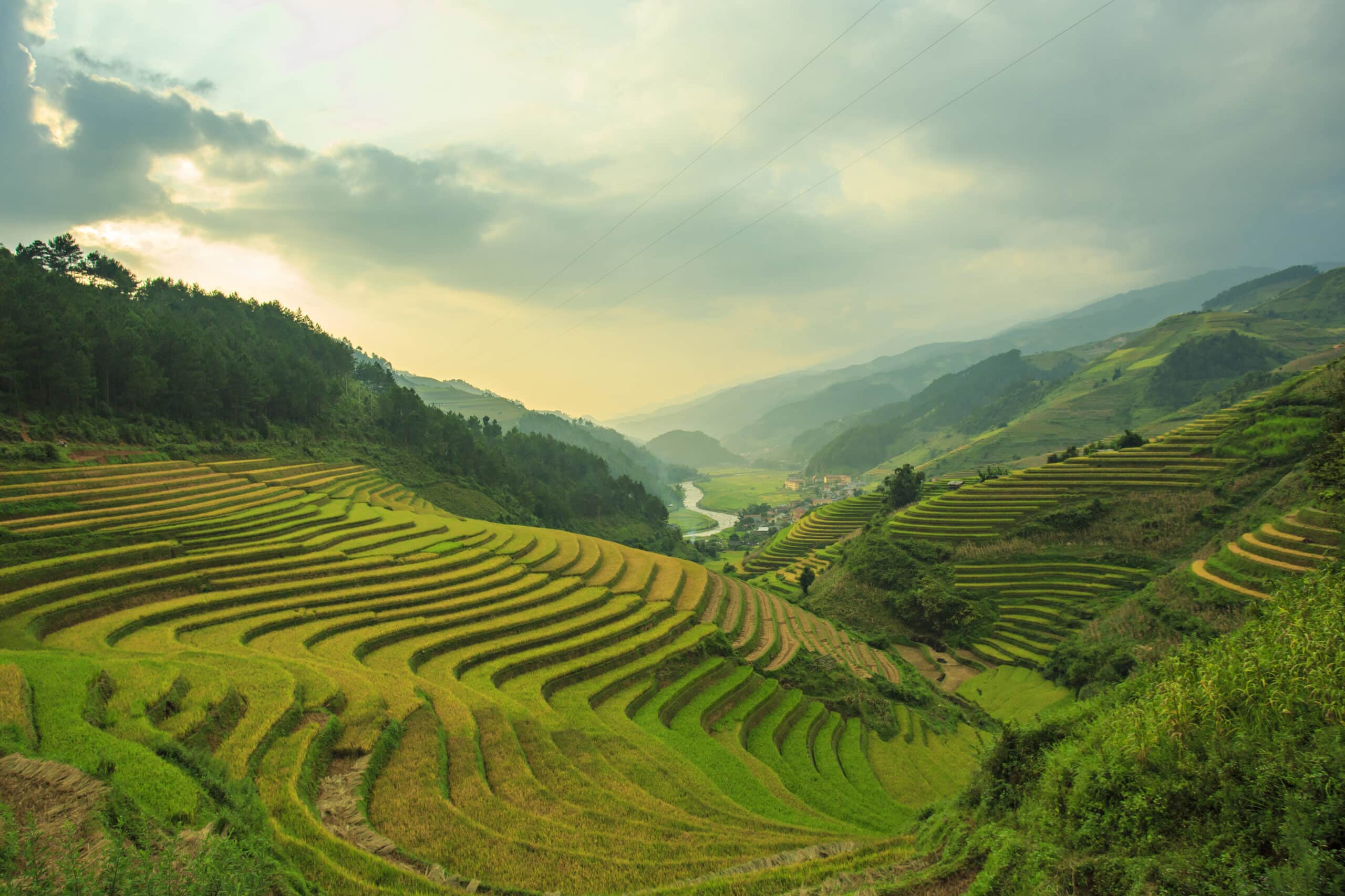
Terraced rice fields stretch across a hilly landscape under a cloudy sky, with trees and a distant river visible in the valley, inspiring future entrepreneurs to dream big and engineers to design sustainable solutions.

Table of Contents

Forest and grassland habitat make up for one third and one half of the world’s surface, respectively. Land-use has changed due to rapid urbanization, increased agricultural practices, but deforestation or afforestation being instrumental factors of water imbalances. Natural ecosystems are self-regulating ecosystems that support many essential services for people and communities, including the provisioning of food.

Climate change is caused by greenhouse gas emissions, that cause the air and ocean temperatures to rise, resulting in snow and ice to melt and ending in floods. Land adaptation from natural to managed ecosystems, is necessary for food production, but continues to occur at very high rates with significant water impacts. Further, increased rainfall variability exposes the agricultural industry to the effects of flood and drought disasters. Many areas with water restrictions are now overcoming them with decentralised water technology upgrades.

MEB has helped organisations eliminate challenges by increasing capacity and output with efficient proven decentralised water technology. Our systems are governance friendly for seamless institutional cooperation across all scales. We are experts in change mitigation, risk reduction, and the design and maintenance of essential water services, speak to our experts now!

Share:

Case Study

A revolutionary approach to water supply

To cope with a crippling and prolonged drought crisis, MEB installed a containerized desalination plant at Richards Bay, South Africa. The project was completed in just seven months. The containers were easily transported to the designated location.1

More Posts

Related Posts
Securing a Sustainable Fresh Water Supply

Modular desalination technology represents a major leap forward in global water security. By eliminating the high costs and lengthy construction timelines of traditional plants, the

A white construction helmet sits on top of architectural blueprints and rolled plans, with drawing tools including a compass and pens nearby on a wooden desk.
How To Evaluate An EPC Partner

Before signing any contract, run potential partners through these criteria: Track record: Look for a history of delivering similar projects successfully. Ask for case studies

Rows of wooden barrels are stacked on metal racks in a wine cellar.
Where Does Winery Wastewater Come From

Most winery wastewater isn’t from the wine itself it’s from cleaning tanks, barrels, hoses, floors, and bottling lines all need regular sanitizing, and that takes