Wastewater treatment technology is of vital importance for protecting human dignity and health, the environmental impact of polluted water continues to give us more and more challenges to overcome. Wastewater treatment on a commercial and utility scale level was implemented since the beginning of the 20th century to specifically treat wastewater.
In the year 1994, the government commissioned the Department of Water and Forestry to ensure “equal access to water and sanitation” for all South Africans. To this end, a community water supply and sanitation plan was developed to target priority areas for establishing water supply and sanitation systems, and a national sanitation plan was developed to increase the distribution rate of water supply and sanitation services.
As premium independent water and energy service provider, MEB Energy can provide reliable access to services to South Africans – with the support of advanced water and wastewater treatment technology, and a progressive approach to getting you the solutions you need.
Water supply and sanitation in South Africa has both successes and challenges and South Africa’s government still grapples with basic services and a backlog of water and sanitation. As a result, the South African government has made a strong commitment to supplying high standards of service and substantial investment from the private sector to achieve these goals will be required. South Africa has made some progress in improving water supply services, but not all are sharing in some of the progresses.
The role of the MABR technology in addressing water shortages and pollution
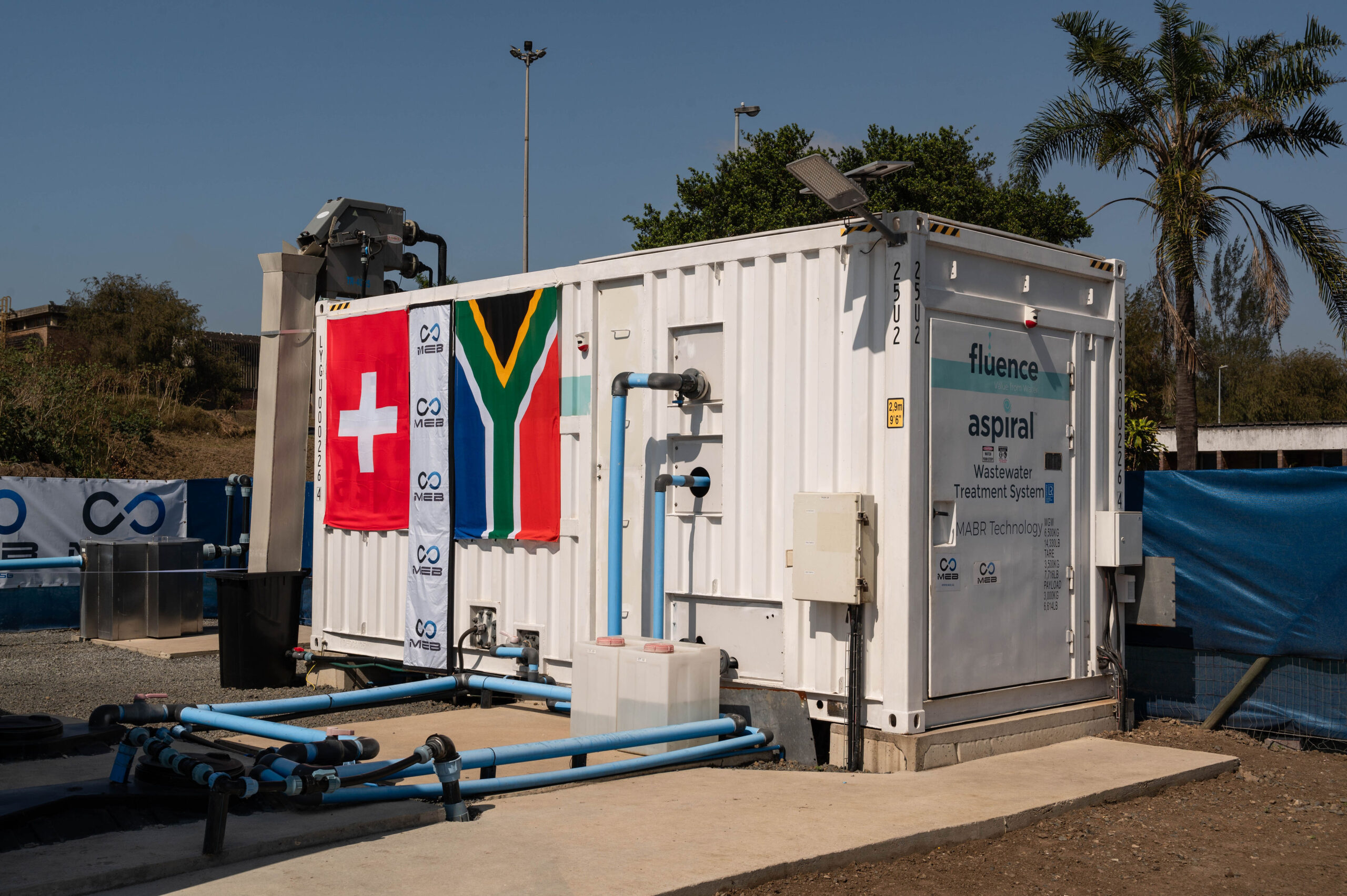
Our MABR project continues to bring groundbreaking improvements to domestic wastewater. In view of the flexibility of the MABR technology, we continue to find new ways of optimizing and improving the MABR for new application areas. We pride ourselves with pioneering this technology in South Africa to bring central focus on the principle, application, and development progress we have made with the MABR Aspiral system.
Key Benefits of the MABR technology
- Reduced volume of sludge
- Less energy consumption
- Modular
- No Membrane clogging.
- Proven technology
- Low Maintenance and Operation Costs
- Low Odor and Noise
- Lower CO2 footprint due to reduced energy consumption
- Small footprint
MABR membrane aerated biofilm reactor is helping communities around the globe cope with water shortages and pollution. MEB operates as turnkey service provider for municipal wastewater systems worldwide. The high-quality manufacturing process of the semi-permeable spirally wound plastic used in the system allows us to design a robust and flexible solution that can be applied on a larger scale to cater for any capacity or water quality changes.