

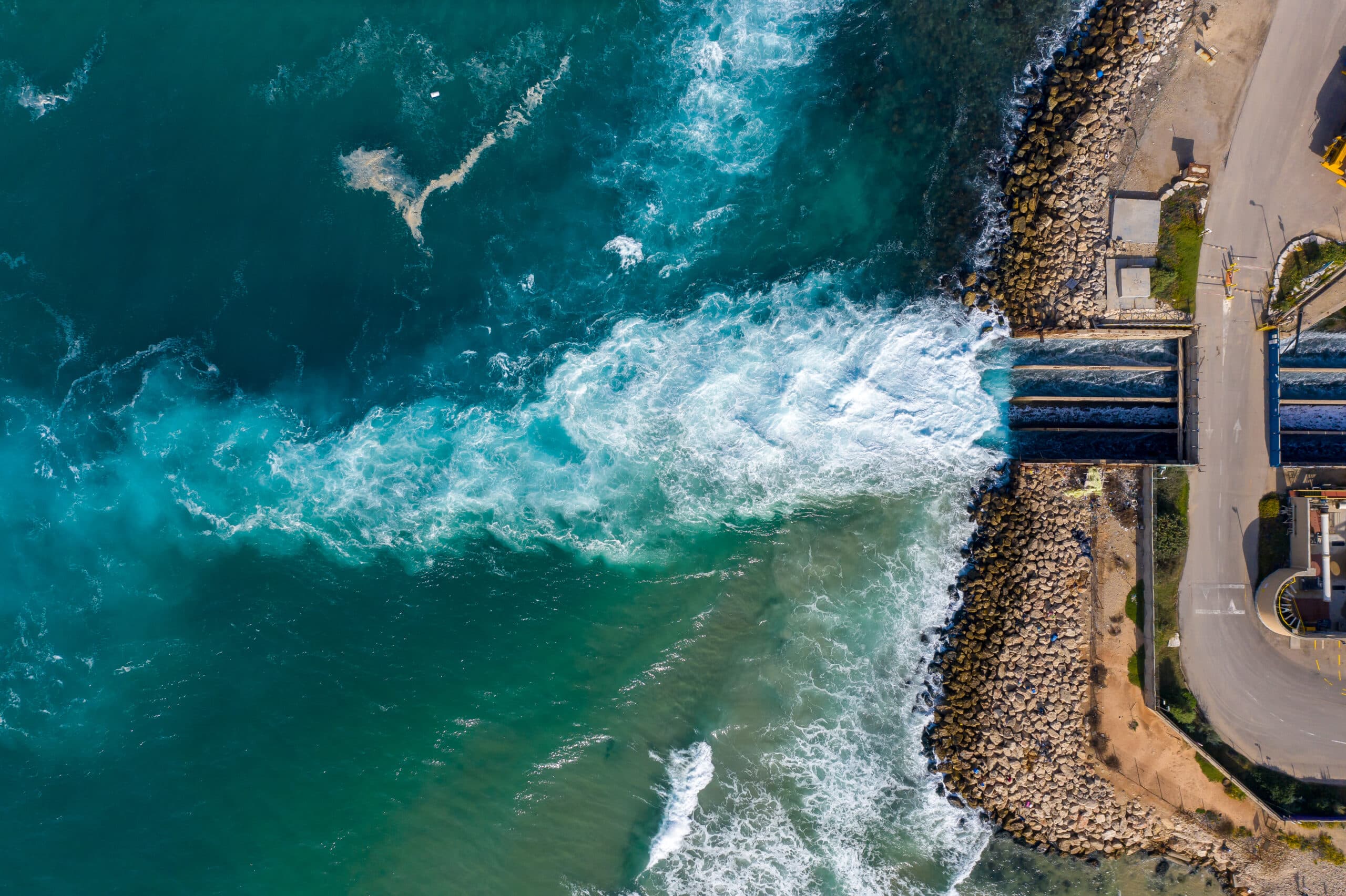
Desalination technology removes salts and other minerals or contaminants from seawater, brackish water, and wastewater – and it is a now common solution to obtain fresh potable water for human consumption and for domestic and industrial use. From the 1960s to today, desalination plants have witnessed continuous growth. Especially the last three decades have seen major growth, in terms of plant installation and operations. These days, many countries in Africa and an estimated 300 million people globally rely on water from desalination plants.
Islands within the Caribbean source many of their water through desalination of seawater. Saudi Arabia will get 70% of the freshwater through desalination. Even countries with plentiful freshwater sources can usually benefit from desalination as it can certainly offer an emergency way to obtain water in occasions of the drought. (Ackerman, 2018)
The Benefits of Decentralized Desalination
Large desalination plants pump out large volumes of water, but smaller, decentralized plants make more sense in a growing number of scenarios, especially for rural applications and costal metropolitan cities.
Traditional desalination plants may have the advantage of economy of scale, but the flexibility and efficiency of decentralized plants make them a superior option for various applications:
• Beneficial pipelining and auxiliary costs;
• Smaller plant footprint;
• Simplified planning due to Decentralization;
• Agility of Decentralised Desalination;
• Reduced OPEX;
• Can be moved to a secondary location;
• Ideal for emergency water supply;
• High recovery rates;
• Preassembled with embedded remote monitoring;
• Quality and Habitat Protection.
Our highly efficient technology includes a cleaning in place (CIP) process for the ultrafiltration membranes that inhibits microorganism growth and scaling. This natural disinfecting effect lowers energy and chemical consumption and minimizes the plant’s ecological footprint. Our solutions have a reduced brine discharge and has no toxic impact on marine life and additionally the lowest carbon footprint desalination plant in its class. Portability of our modular containerized packaged plants can be easily moved for redeployment or resale. Learn more about our line of products.