
Please ensure Javascript is enabled for purposes of website accessibility

Social Protection of Women and Girls through Water

Women empowerment starts with safe access to water and gender conscious sanitation, so as to give the female population of Africa a chance to actively participate in the economy, whether as experts, partners, leaders of change or as an instrument for peace.
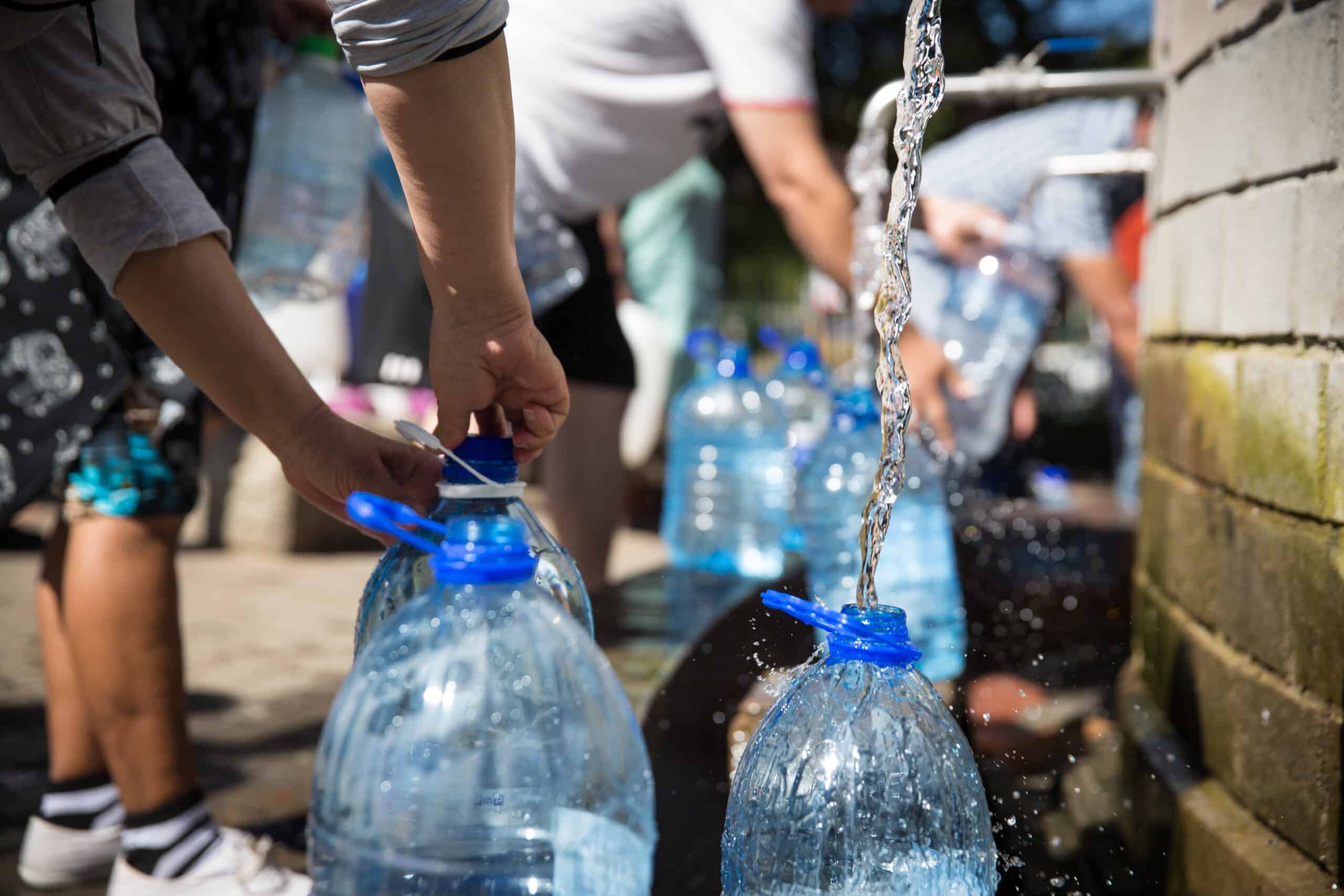
People filling large blue water containers from a stream of running water, mindful of the looming Day Zero as whispers of a water shortage echo throughout the community.

Table of Contents

Women empowerment starts with safe access to water and gender conscious sanitation, so as to give the female population of Africa a chance to actively participate in the economy, whether as experts, partners, leaders of change or as an instrument for peace.

Africa’s progress towards female empowerment, has been steady, but slow and has been largely hampered by deficiencies in WASH (water, sanitation and hygiene) facilities, which decreased female participation rates at school and work, thus lowering women and girls’ preparedness for education- and employment-related prospects.

High levels of poverty and deep disparity continue to be major challenges in Africa. In the higher-density rural areas of the continent, opportunities for employment are minimal, while rain fed agriculture contributes to a tiny percentage of household survival, it remains the third-most important means of livelihoods, after domestic work and Government grants.

Water insecurity weakens the ability of social protection in order to promote gender equality and female empowerment. The burden of water collection and lack of water facilities can restrict female involvement in various types of social protection opportunities as well as the education and employment opportunities being promoted. Water insecurity also compromises social protection efforts to promote health, nutrition and food security.

MEB has a long history of addressing deep-rooted poverty, instability and social protection through the equitable access of clean water. We can competently support municipalities in helping communities affected by volatile and progressive risks, including rising water insecurity associated with climate change and informal settlement growth.

Share:

Case Study

A revolutionary approach to water supply

To cope with a crippling and prolonged drought crisis, MEB installed a containerized desalination plant at Richards Bay, South Africa. The project was completed in just seven months. The containers were easily transported to the designated location.1

More Posts

Related Posts
A row of industrial containers with pipes and blue plastic bins outside, located on a paved area under a clear sky—taking the next step toward sustainable water solutions.
Where is Nirobox™ Making an Impact

Thanks to its compact footprint, rapid deployment capabilities, and high efficiency, Fluence Nirobox™ desalination systems are making a significant impact across a wide range of

A white industrial container labeled "Fluence Aspiral" with pipes, ladders, and safety signs stands outdoors on a concrete base under a cloudy sky, Securing Our Most Vital Resource for the future.
Sustainable wastewater management

As populations expand and industrial development accelerates, the demand for clean water continues to climb. Efficient wastewater treatment is no longer just an environmental goal-it

A close-up illustration of water with bubbles rising to the surface against a white background.
Modern wastewater treatment

Facilities encounter multiple roadblocks when processing wastewater. Influent water often contains varying levels of heavy metals, organic compounds, and suspended solids. Treating these diverse contaminants